

 Die Herstellung von Ricotta gehört zu den Dingen, die schon seit langen auf meiner toDo-Liste standen. Immerhin habe ich inzwischen wirklich viele Blogeinträge zu diesem Thema gelesen, und es klingt nicht sehr schwierig. Ich mußte mich also nur noch für ein Rezept entscheiden. Claudia von Fool for Food hat Buttermilch verwendet, genauso wie Lauren von I’ll eat You, Nick & Sara von IMAfoodblog benutzten Molke von ihrer Mozzarellaproduktion und bei der Hedonistin (Low Budget Cooking) war es Grapefruitsaft.
Ausserdem fand ich noch Varianten, die Essig, Zitronensaft oder Magnesiumsulfat verwendeten. Für meinen ersten Versuch wählte ich Zitronensaft, doch der resultierende Ricotta hatte einen leicht sauren Nachgeschmack und war von der Konsistenz zu grobkörnig, fast wie Hüttenkäse.
Also habe ich noch ein wenig mehr gelesen, und fand bei Low Budget Cooking in den Kommentaren den Einwand von Ostwestwind (Küchenlatein), dass mit der Säure das Casein aus der Milch gefällt wird anstatt das Globulin und Albumin aus der Molke wie beim Orginal-Ricotta.
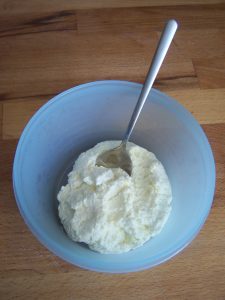
Also musste Molke her! Leider hatte ich nicht soviel Zeit, um wie bei IMAfoodblog die Molke bei der Mozzarellaherstellung selbst zu gewinnen (obwohl die Mozzarellaherstellung jetzt auf meiner toDo-Liste steht), daher habe ich es mir leicht gemacht und beim Wochenendeinkauf ein Becher reine Molke gekauft. Und dieses Mal war ich mit dem entstanden Ricotta sehr zufrieden. Sahnig, cremig mit einem Hauch von Säure. Sehr lecker!
Ricotta
ergibt etwa 130g
- 500g Molke
- 500g Vollmilch (Biovollmilch von Rewe mit 3,8% Fett)
Molke und Milch in einem Topf auf etwa 70°C erhitzen. 30 min stehen lassen, bis sich die ausgefallenen Proteine an der Oberfläche abgesetzt haben. Diese in ein mit einem Tuch ausgeschlagenes Sieb schöpfen und 1-2 Stunden abtropfen lassen.
Soll im Kühlschrank bis zu 5 Tagen halten – soweit ist es bei uns aber nicht gekommen, da der Ricotta direkt weiter verarbeitet wurde.
- 500g Vollmilch (Biovollmilch von Rewe mit 3,8% Fett)
Molke und Milch in einem Topf auf etwa 70°C erhitzen. 30 min stehen lassen, bis sich die ausgefallenen Proteine an der Oberfläche abgesetzt haben. Diese in ein mit einem Tuch ausgeschlagenes Sieb schöpfen und 1-2 Stunden abtropfen lassen.
Soll im Kühlschrank bis zu 5 Tagen halten – soweit ist es bei uns aber nicht gekommen, da der Ricotta direkt weiter verarbeitet wurde.
English (UK)
The acid set cheeses NEVER hold up compared to real ricotta (though they are good vs. store bought usually in a pinch).
I’m so happy that you finally got some that meet our expectations, nothing like the real deal!
PS I’m surprised you got whey at your supermarket. I have never seen it for sale anywhere except at a farmer’s house.
PSS Now that I think about it, with whey available at the market and that awesome pizza oven thing you have that isn’t for sale in the USA, maybe I should just move over there and be done with it? Do you think you could tutor me in German? 🙂
@ Nick, of course I can tutor you in German, but could you bring then some white whole wheat flour with you, please? I can not find it here neither in supermarkets nor wholefood shops nor in the internet.
Maybe we should mix german and american supermarkets, so you get the pizzaoven and whey and I get a greater choice of flour 🙂
Der Versuch mit der Molke steht bei mir noch aus. In meinem Bio-Supermarkt gab es keine reine Molke, der andere Markt, der sie auf jeden Fall hat, ist zu weit weg. Dein Ricotta sieht sehr appetitlich aus.
Das ist eigentlich kein richtiger Ricotta, denn der wird 2x gekocht,deshalb der Name Ri-cotta. Das heisst, du müsstest die aufgefangene Molke nochmals kochen. Das habe ich mal gemacht und hatte am Schluss 1 EL Ricotta. 😉
ich dachte das hieße ri-cotta, weil man die Molka nochmal verwendet.
@ Alexander: Für Ricotta werden tatsächlich Proteine aus der Molke gefällt, dazu muss man der Molke allerdings Milch zusetzen, da für diesen Vorgang Casein benötigt wird, welches in der Molke nicht (mehr) vorhanden ist. Würde man Molke alleine aufkochen, würden die Molkeproteine (vor allem Albumin) zwar denaturieren, wären aber so fein, dass man sie nicht ohne weiteres aus der Masse entfernen könnte. Durch das Casein bilden sich größere “Klumpen”, die man dann herausfiltern kann.
Deshalb verwende ich in dem Rezept auch eine Mischung aus Ricotta und Molke.